Adolescents are at the highest risk for experiencing health problems related to substance use. This resource provides an overview of screening adolescents for substance use disorders including assessments and tips.
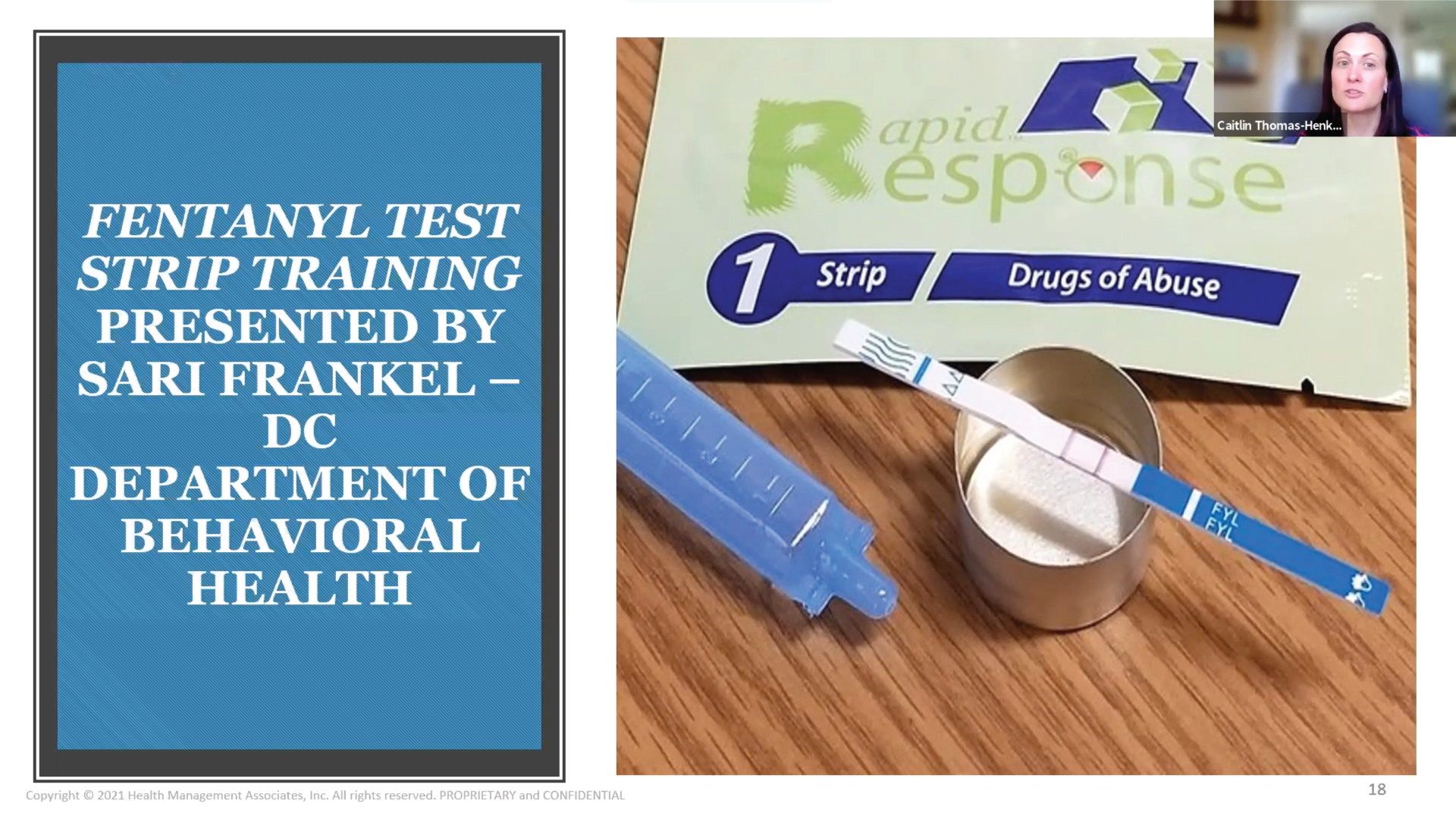
This brief video provides an overview of fentanyl strip testing to identify the presence of fentanyl in unregulated drugs for people who use drugs (PWUD). It also includes a brief demo of how to use fentanyl test strip testing to detect the presence of fentanyl in their drug supply.
Testing for fentanyl test strips can identify the presence of fentanyl in unregulated drugs. They can be used to test injectable drugs, powders, and pills. Being aware if fentanyl is present allows people to implement appropriate harm reduction strategies to reduce the risk of an overdose.
Presented by Sari Frankel, DC Department of Behavioral Health.
Registries are important population health tools that allow organizations to collect, organize, aggregate, and utilize the information for a variety of purposes. Maintaining registries for certain disease states such as depression or diabetes provides easy access to results, identification of care gaps, and level of improvement and can lead to adjustments in care as needed. This Short Take video provides an introduction to registries and how to use them.
An online resource to provide broad access to resources to clarify best practices to support and improve the care for substance-exposed mothers and newborns. The toolkit includes resources to support screening, assessment, and level of care determination; treatment; transitions of care; and education.
The California Department of Health Care Services (DHCS) has implemented the California Medications for Addiction Treatment (MAT) Expansion Project to address the opioid epidemic throughout the state. This website serves as a separate yet complementary resource to the DHCS MAT Expansion Website and provides resources and information related to the four MAT Expansion Project initiatives operated by Health Management Associates.
The California MAT Expansion Project aims to increase access to MAT, reduce unmet treatment need, and reduce opioid overdose-related deaths through the provision of prevention, treatment, and recovery activities. The project focuses on individuals experiencing homelessness, youth, rural, and tribal populations with limited MAT access. The California MAT Expansion Project, composed of nearly 30 initiatives, is funded by grants from the Substance Abuse and Mental Health Services Administration (SAMHSA).
HMAedu.com is an educational resource specifically designed for training treatment teams about addiction, pain, and behavioral health. With over 25 hours of education through the lens of patient-centered care, users can explore topics of interest or follow the suggested curriculum path. Once a user signs in, the learning management system automatically loads modules that are pertinent to the user’s level of training. This automation allows for consistency in messaging to all providers without delivering information beyond the scope of practice. Each course starts with a TED Talks-style overview that is followed by patient-focused modules of 3-10 minutes each. Each module is traced for completion and can be reported back to the client and individual for tracking purposes.
This webinar focuses on effective strategies for engaging justice-involved populations and ways to support individuals transitioning to communities. The speakers shared case studies to illustrate the ways that providers have managed transitions of care and supported people. This session is approved by the American Academy of Family Physicians for up to 1 AMA Level 1 CME credit.
Healthcare systems are in the process of reforming themselves to better meet the needs of people with, or at risk of developing, chronic diseases and long-term conditions. One goal of these efforts is the coproduction of activated, informed, engaged, and motivated patients and citizens.
This brief webinar will review the basics of behavioral activation, distress tolerance skills, and problem-solving therapy to use in skills-based, time-limited treatment settings.
This brief video introduces the concept of brief interventions and review motivational interviewing and mindfulness. Presented by Dr. Lori Raney, Principal, Health Management Associates.