This brief video explains the process of enhanced referral to improve patient engagement and completion of the referral and improve provider relationships with referrals. Presented by Dr. Lori Raney, Principal, Health Management Associates.
This is a short reference guide to developing a structure to enhance the referral experience for providers and service recipients. It covers setting standards for partnership starting with your value proposition. It outlines the continuum of provider relationships from informal agreements through forming a business entity and finally provides initial guidance and further resources for establishing care compacts.
This document represents a collaboration between the American Psychiatric Association (APA) and the American Telemedicine Association (ATA) to create a consolidated update of the previous APA and ATA official documents and resources in telemental health to provide a...
There is a need for an organizing model that assists practices and policy-makers to prioritize the steps of integration implementation and the need for both technical assistance and funding for key program elements. In order to advance evidence-based integration of general health care in BH settings, clinics have become intensely interested in the underlying steps they can take to implement and advance specific general health practices.
Based on a targeted literature review and input from diverse stakeholders, the framework presented in this report seeks to provide BH clinics and other organizing entities, such as New York State's (NYS) Behavioral Health Care Collaboratives (BHCC) and Behavioral Health Independent Practice
Associations (IPA), with practical guidance using a continuum-based road map approach on the intentional and incremental steps to achieve and advance key subdomains of integrated care for community BH clinics.
What is less clear has been how to accomplish that at scale, given the varying types of primary care practices and, in particular, the resource limitations of small and medium-size practices and the complexity of the models that are currently the evidence-based standards for integrating medical and behavioral care. This framework seeks to fill that gap by delineating a series of steps that providers can take to move toward the integration of behavioral health services into their primary care practices.
The toolkit contains a variety of information and resources including a step by step guide about:
education about tobacco use
skills for engaging people in tobacco cessation discussions
efficient methods for assessing readiness to quit
information and research on treatments
The research presented by these three groups seeks to prioritize desired treatment outcomes as defined by diverse people with lived experience. From this information, the researchers crafted recommendations that could help policymakers, providers and researchers develop, implement, reimburse and evaluate more engaging and perhaps effective substance use services.
The goal of the ICTA program is to improve care and Medicaid beneficiary outcomes within three practice transformation core competencies:
Delivering person-centered care across the care continuum
Using population health analytics to address complex medical, behavioral health, and social needs; and
Engaging leadership to support value-based care.
This document provides more detail, including sub-elements for each core competency.
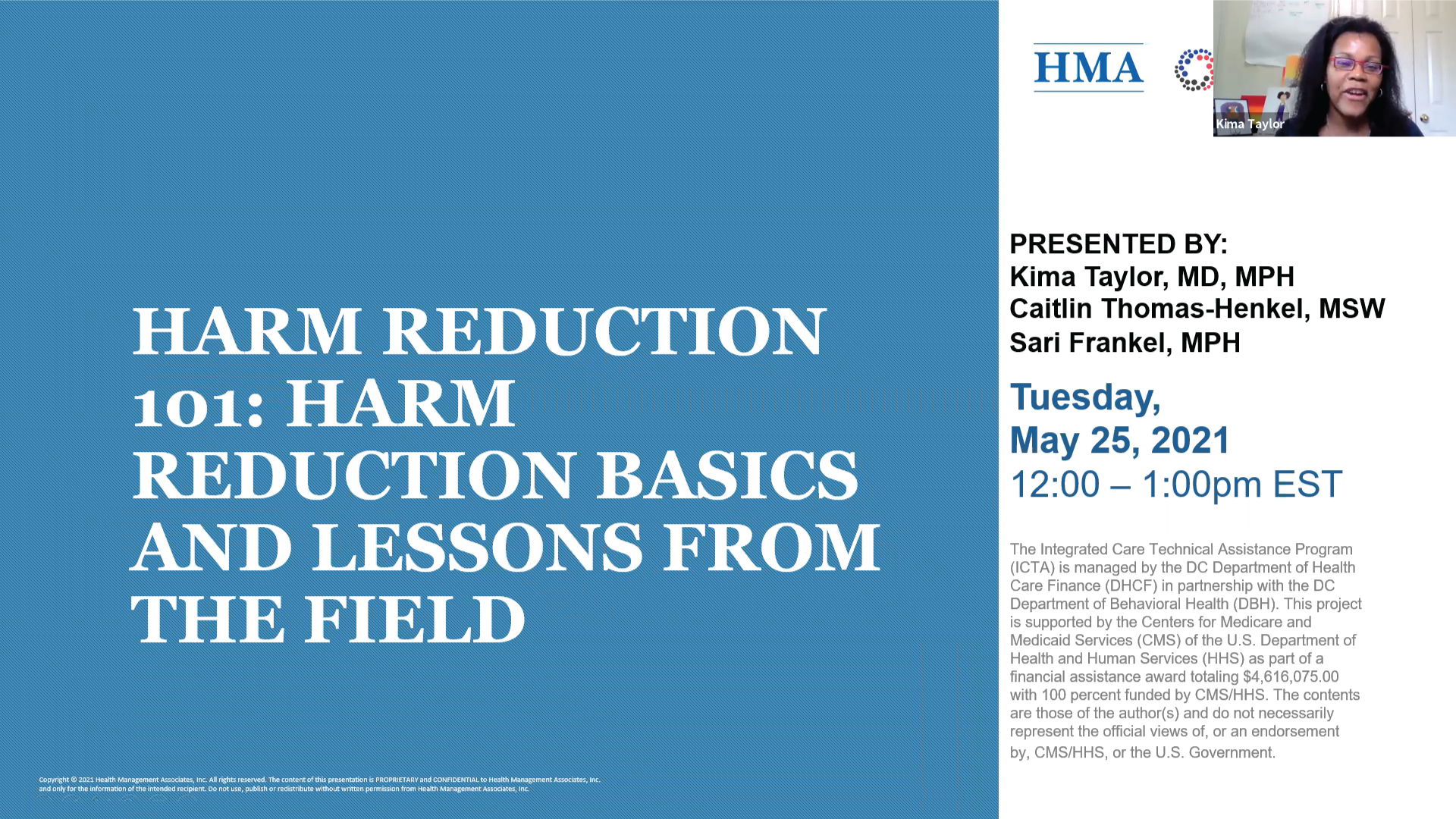
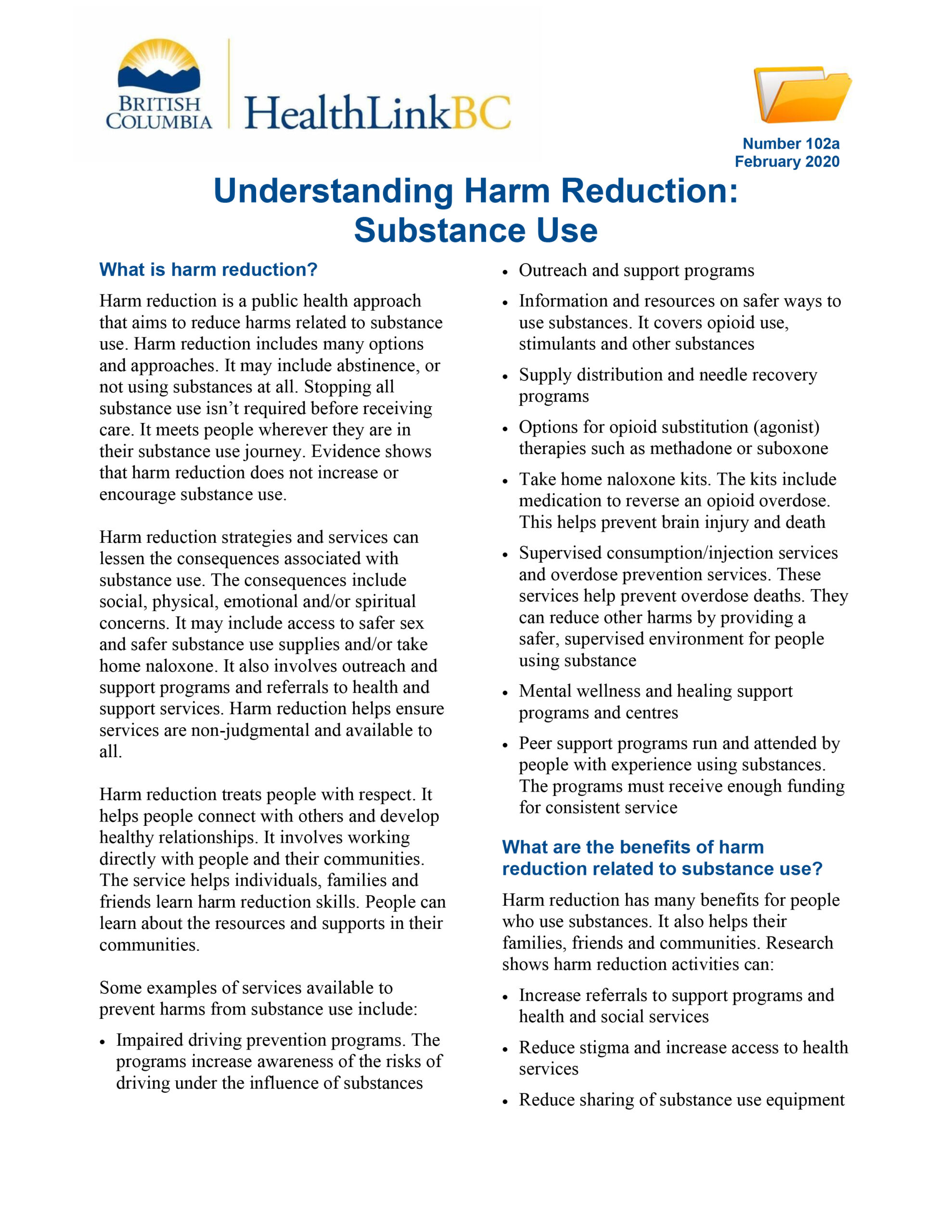
People with substance use disorders are at particular risk for overdoses and developing one or more primary conditions or chronic diseases. During this webinar, presenters will discuss harm reduction as a public health approach that aims to reduce harms related to substance use. Presenters will discuss strategies, policies, programs, and practices that aim to minimize negative health, social and legal impacts associated with drug use, drug policies, and drug laws.