Bread for the City set an initial goal of 25 percent depression remission in patients with a PHQ-9 score over 10, which aligns with national benchmarks. In the first year of registry use, they exceeded their goal, achieving depression remission in 27 percent of their...
As part of the Integrated Care DC program, Anchor Mental Health, a division of Catholic Charities, worked with HMA coaches to better understand and address their quality data to improve clinical outcomes. This work included a focus on the use of CRISP tools as well as...
In this edition… October is National Depression and Mental Health Screening Month Upcoming lunch & learn sessions Provider Spotlight: Bread for the City On-Demand: Advance Directive Featured Resource: Advancing integrated mental health solutions Latest...
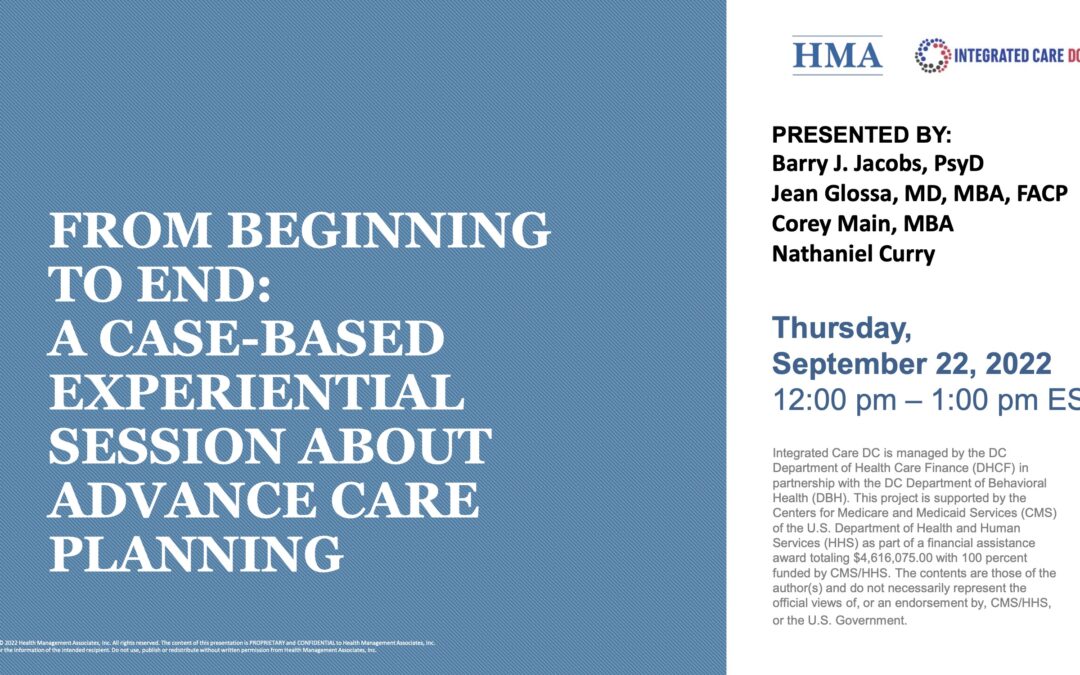
This case-based, hands-on session will allow physical and behavioral health professionals to walk through the steps of engaging patients with different presentations and personalities in Advance Care Planning, codifying their wishes in Advance Directives, and making those Advance Directives accessible on the health information exchange. The session’s experiential design will help providers consolidate their skills, increase their comfort and confidence, and feel inspired to approach patients about Advance Care Planning with new ideas and tools. It will include ad hoc case discussions and time for providers to raise questions and concerns.
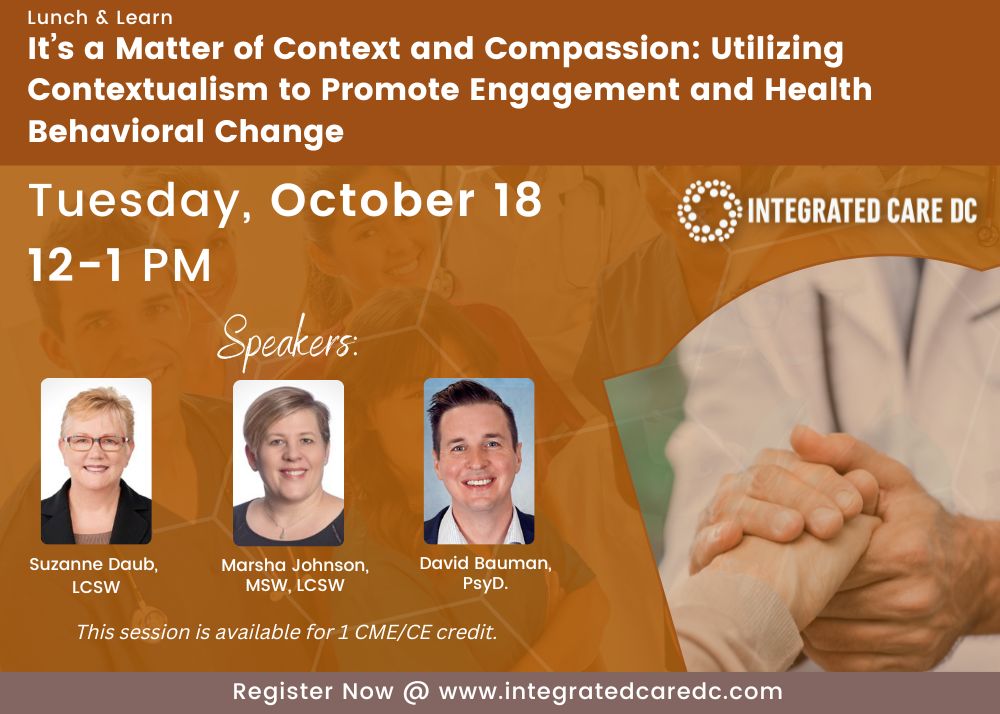
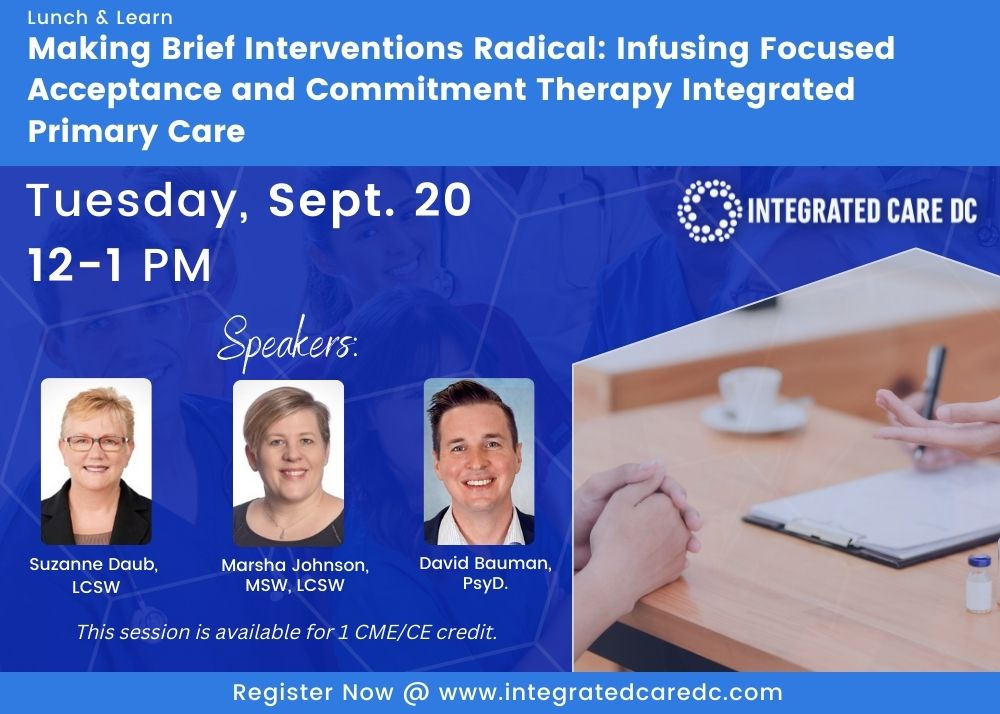
This webinar discusses the concept of functional contextualism and the impact this philosophy has on the therapeutic orientation of focused Acceptance and Commitment Therapy (fACT). Specifically, the session will present fACT concepts such as the Contextual Interview, philosophical underpinnings, and influences of psychological flexibility. The session will also cover the philosophy of functional contextualism/fACT fits well within the Primary Care Behavioral Health philosophy.
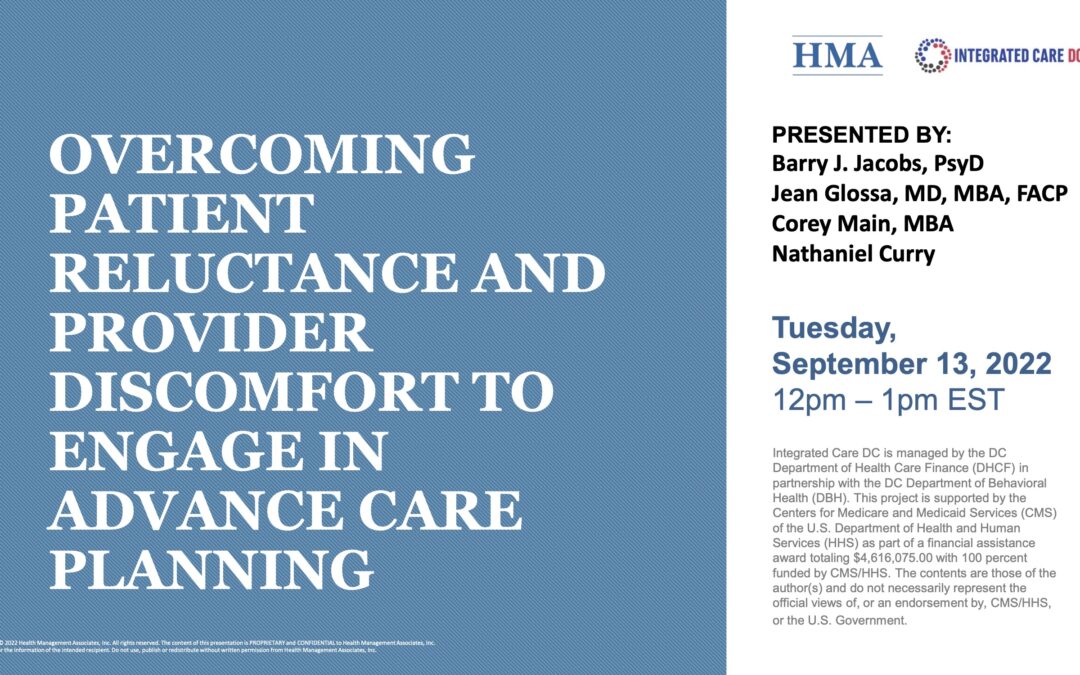
Among the many barriers to Advance Care Planning, patient reluctance and provider discomfort play large roles. In this highly interactive workshop, we’ll discuss concrete behavioral strategies for overcoming the fears that prevent patients from planning for end-of-life care or times when they are incapacitated. Specific topics include employing the spirit of Motivational Interviewing, normalizing doubts, and helping patients understand the benefits for their family members when they decline to plan. The importance of codifying patient wishes and uploading them to health information exchanges through AD Vault will be stressed. Case illustrations will be used throughout.