This interactive webinar will cover several key topics: clarifying the purpose and processes of Advance Care Planning; its importance for patient self-determination and reducing healthcare costs; providers’ roles as trusted guides in engaging patients in planning; and technological solutions for ensuring Advance Directives are widely downloadable when most needed. CRISP DC’s AD Vault will be introduced. Case illustrations will be used throughout.
In this edition… National Recovery Month Upcoming Lunch & Learn Sessions DC Provider Spotlights: Anchor Mental Health New Film Chronicles Recovery in Communities Featured learning resource Latest learning resources Dive into a topic September is National...
This session will provide an open opportunity for DC Primary Care and Behavioral Health providers, practice administrators, care managers to drop in with questions or technical assistance requests. In this session, we will follow up on any questions or issues raised and unanswered in the first two sessions.
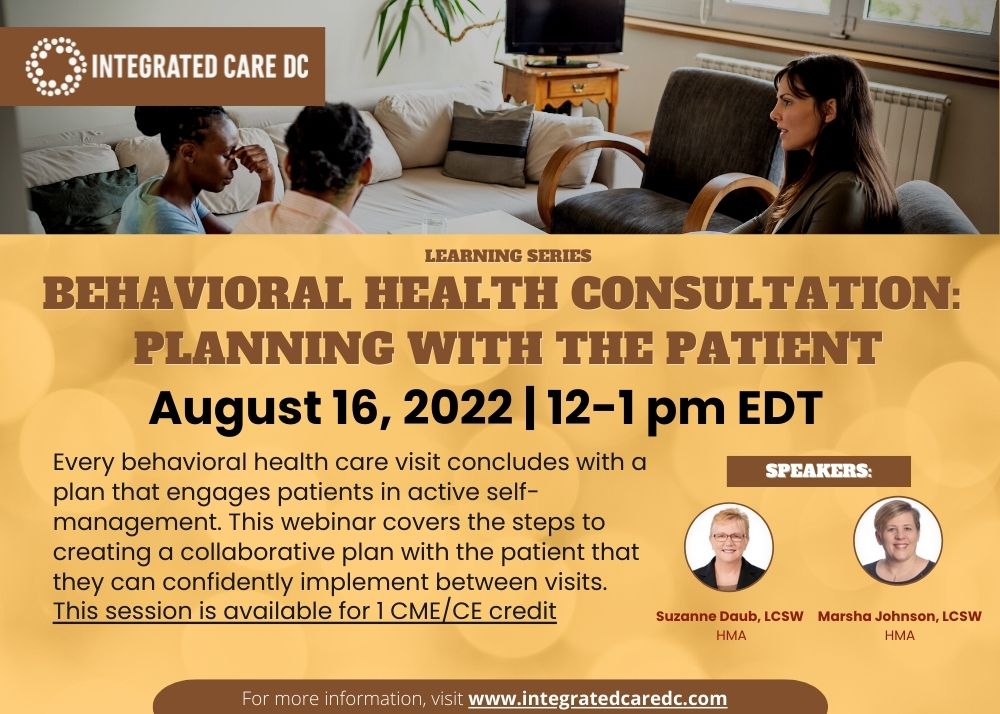
Every behavioral health care visit concludes with a plan that engages patients in active self-management. This webinar covers the steps to creating a collaborative plan with the patient that they can confidently implement between visits.
DC-based Medical Home Development Group, which successfully piloted CRISP DC HIE’s consent management tool, will discuss how it used the tool in its workflow and lessons learned. CRISP DC will also join the session to highlight key features and benefits of the consent management tool.
This session will focus on enhancing care coordination for patients with SUD and the importance of gaining permission to release information. We will review scenarios such as:
A 35-year-old patient is seeing her PCP. The patient has Type I diabetes and has been much better controlled since she has been in treatment for OUD for the past 5 years. Recently, the patient experienced some life stressors, lapsed and has not been back to treatment for two weeks.
A 60-year-old patient has just recently started treatment for co-occurring depression and AUD after discussing treatment for many years with the PCP. He has hypertension and diabetes, and the alcohol use has been exacerbating these conditions for years. The PCP is concerned about the patient’s ability to stay in treatment as the patient has recently lost his job and is separating from his partner of many years.
Staying informed of a patient’s recovery status can impact how you treat other health conditions and is an important component of their overall care. Have you hit barriers when trying to get the clinical information you need care for your patient? Are you aware of the new pathway to obtain this information? In this session, we will focus on consent management, how to talk with your patients about consent, the basics of 42 CFR Part 2, myth busting, use cases, and FAQs. We will introduce CRISP DC’s Consent Management tool, including a history of its development, gaps it will address, and key features and why this is a priority in the District.
In this edition… National Health Center Week – Aug. 7-13 Upcoming lunch and learn sessions New film chronicles addiction in communities Learning resources Dive into a topic National Health Center Week August 7 – 13 National Health Center Week is an...
This highly interactive webinar will address the structure of the BHC visit from PCP screening for behavioral health conditions and implementing a warm handoff to the steps BHCs take when conducting a rapid and targeted functional assessment.