Change is not a concrete process, but rather, a fluid process. Individuals tend to move through different “stages of change” in the management of medical problems. These stages include: 1) precontemplation, 2) contemplation, 3) preparation, 4) action, and 5) maintenance.
Many randomized controlled trials in which motivational interviewing (MI) is a key intervention make no provision for the assessment of treatment fidelity. This methodological shortcoming makes it impossible to distinguish between high- and low-quality MI interventions, and, consequently, to know whether MI provision has contributed to any intervention effects. This article makes some practical recommendations for the collection, selection, coding and reporting of MI fidelity data, as measured using the Motivational Interviewing Treatment Integrity Code. We hope that researchers will consider these recommendations and include MI fidelity measures in future studies.
This guide contains a foreword and five chapters. The chapters stand alone and do not need to be read in order. Each chapter is designed to be brief and accessible to healthcare providers, healthcare system administrators, community members, policymakers, and others working to meet the needs of people at risk for, experiencing, or recovering from SMI and/or SUD.
The goal of this guide is to review the literature on the effectiveness of telehealth modalities for the treatment of SMI and SUD, distill the research into recommendations for practice, and provide examples of how practitioners use these practices in their programs.
To establish the reliability and validity of the Family CAGE (an acronym indicating Cut down on drinking; Annoyed by complaints about drinking; Guilty about drinking; had an Eye-opener first thing in the morning), a four-item instrument intended to assess family alcohol-related problems.
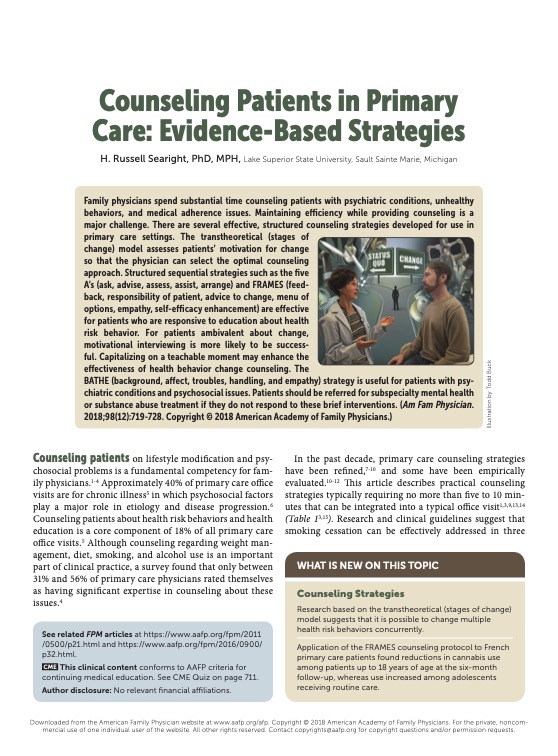
Family physicians spend substantial time counseling patients with psychiatric conditions, unhealthy behaviors, and medical adherence issues. Maintaining efficiency while providing counseling is a major challenge. There are several effective, structured counseling...
The common narrative is coronavirus disease 2019 happened, payment and policy barriers were quickly lowered, and voila, telemedicine, a technology for which adoption had been slow over the past decade, is, within a matter of months, in widespread and successful use. Fait accompli. On to this narrative has been grafted the hopes that telemedicine will solve other persistent problems, particularly in primary care.
This change guide is designed to assist primary care clinicians and leaders to integrate care for patients with unhealthy alcohol and/or other drug use into routine medical care. As behavioral health care is increasingly integrated into medical settings, especially primary care, the focus is often on depression and anxiety. Care for alcohol and/or other drugs is often omitted or minimized, likely reflecting: stigma, lack of workforce training/education, and the traditional separation of care for alcohol and other drugs from traditional health care (e.g., primary care, emergency care, and behavioral health, etc.). This guide expands on and updates the widely recognized model of Screening, Brief Intervention, and Referral to Treatment (SBIRT).