Preliminary findings are reported from a photovoice intervention, “Recovery Speaks, ”to reduce primary care provider stigma in regard to people with mental illness and addiction.
Substance use disorder treatment professionals are paying increased attention to implementing patient-centered care. Understanding environmental and organizational factors associated with clinicians’ efforts to engage patients in clinical decision-making processes is essential for bringing patient-centered care to the addictions field. This study examined factors associated with patient-centered care practices in substance use disorder treatment.
NIH study suggests a link between cannabis use and higher levels of suicidal ideation, plan, and attempt. An analysis of survey data from more than 280,000 young adults ages 18-35 showed that cannabis (marijuana) use was associated with increased risks of thoughts of...
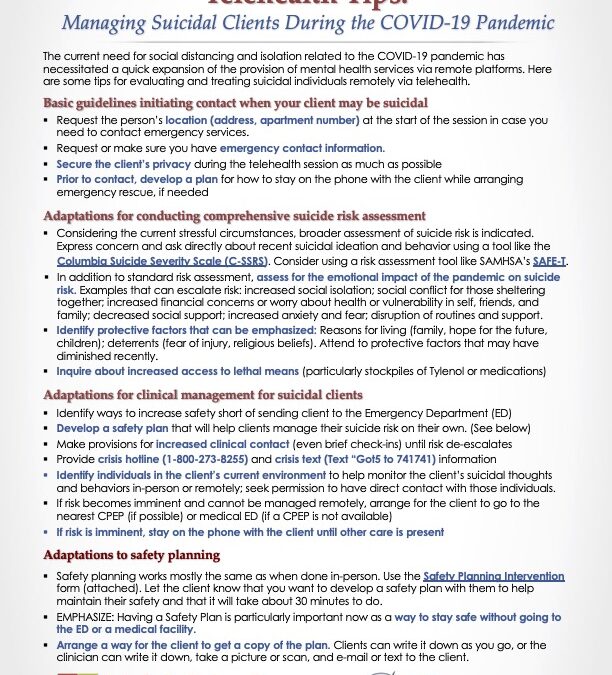
The current need for social distancing and isolation related to the COVID-19 pandemic has necessitated a quick expansion of the provision of mental health services via remote platforms. This tip sheet provides some tips for evaluating and treating suicidal individuals remotely via telehealth.
Controlled substances (CS) diversion in health systems can lead to serious patient safety issues, harm to the diverter, and significant liability risk to the organization. Diversion driven by addiction puts patients at risk of harm, including inadequate relief of pain, inaccurate documentation of their care in the medical record, exposure to infectious diseases from contaminated needles and drugs, and impaired healthcare worker (HCW) performance. In addition to patient harm, there are regulatory and legal risks to the organization, including fraudulent billing and liability for resulting damages, and decreased community confidence in the healthcare system. These guidelines provide a detailed and comprehensive framework to support organizations in developing their CS diversion prevention program (CSDPP) in order to protect patients, employees, the organization, and the community-at-large. Ultimately, each organization is responsible for developing a CSDPP that complies with applicable federal and state laws and regulations but also one that applies technology and diligent surveillance to routinely review process compliance and effectiveness, strengthen controls, and seek to proactively prevent diversion.
Change is not a concrete process, but rather, a fluid process. Individuals tend to move through different “stages of change” in the management of medical problems. These stages include: 1) precontemplation, 2) contemplation, 3) preparation, 4) action, and 5) maintenance.